
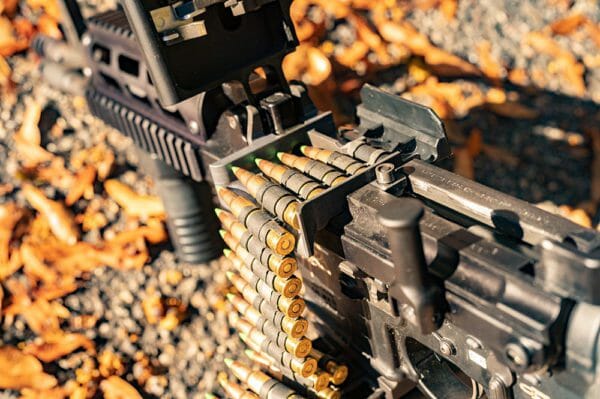
The West Virginia Legislature is once again considering a bold and controversial measure to repeal the state’s longstanding ban on the possession of machine guns, with House Bill 4185 introduced in the 2026 regular session. The bill, which seeks to strike down §61-7-9 of the West Virginia Code, has reignited fierce debate over Second Amendment rights and the interplay between state and federal firearms regulations.
Introduced on January 14, 2026, HB 4185 is a straightforward repeal bill. Its single purpose, as stated in the legislation, is “to repeal the section of code making it unlawful to possess a fully automatic weapon.”
Under current West Virginia law, it is illegal for any person to carry, transport, or possess a machine gun, submachine gun, or any other fully automatic firearm defined as a weapon that fires multiple rounds with a single pull of the trigger unless the owner has fully complied with federal statutes and Treasury Department regulations. Violations carry misdemeanor penalties, including fines of $1,000 to $5,000 and jail time of 90 days to one year.
The existing statute, §61-7-9, dates back decades and mirrors broader federal restrictions under the National Firearms Act (NFA) of 1934. The NFA heavily regulates machine guns through registration, background checks, a $200 tax stamp per transfer, and extensive ATF oversight. Machine guns manufactured after May 19, 1986, are generally barred from civilian ownership under the Hughes Amendment to the Firearm Owners’ Protection Act (FOPA). Pre-1986 transferable machine guns remain legal for civilians who navigate the federal process, but West Virginia’s state law adds an extra layer of prohibition unless federal compliance is met, effectively creating a state-level barrier even for federally approved owners in some interpretations.
Proponents of HB 4185 argue that the state ban is redundant and infringes on constitutional rights. West Virginia has positioned itself as one of the most gun-friendly states in recent years, with permitless concealed carry, strong preemption laws preventing local restrictions, and repeated efforts to nullify or ignore perceived federal overreach. Supporters, including gun rights organizations and some Republican lawmakers, view the repeal as a logical next step in affirming Second Amendment protections. They contend that law-abiding citizens who already comply with stringent federal requirements should not face additional state criminalization. In a state with high household gun ownership rates ranking among the top nationally, the bill aligns with a broader cultural emphasis on individual liberties and self-defense.
Delegate Chuck Horst, who has championed the measure, has framed the repeal as removing an outdated restriction. Past iterations, such as HB 2213 in 2025 and HB 2959, carried nearly identical language and reflected growing momentum among conservative legislators to dismantle state-level gun controls that exceed federal minimums.
The bill arrives amid a broader pro-gun push in the 2026 session. Companion efforts, such as Senate Bill 478, the “Second Amendment Reaffirmation and Protection Act,” would automatically nullify state cooperation with certain federal firearms laws if the NFA, the Gun Control Act (GCA) of 1968, or related statutes are repealed or struck down by the federal courts. Sponsored by Senators Rose, Helton, Maynard, and Rucker, SB 478 includes preemption clauses, private rights of action against violating officials, and prohibitions on state agencies re-enacting federal-style rules. These measures reflect a defensive posture: preparing for potential national changes while solidifying state sovereignty over firearms.
As of mid-February 2026, HB 4185 remains in early stages, referred to the House Judiciary Committee. Similar bills in previous years failed to advance fully or died in committee, but the Republican supermajority in Charleston gives pro-gun legislation a stronger chance than in many other states. The West Virginia Citizens Defense League (WVCDL) and local groups have urged members to contact lawmakers in support, framing the repeal as part of defending freedoms against incremental restrictions. West Virginia’s bill focuses narrowly on repealing the possession ban, but success could signal openness to challenging other NFA items, such as suppressors or short-barreled rifles, in future sessions.
If passed and signed by Governor Jim Justice, the repeal would not immediately flood the state with machine guns. Federal law would still apply, meaning civilians could only possess pre-1986 registered models after ATF approval and payment of tax, or post-1986 samples under dealer/manufacturer licenses. However, the symbolic impact would be significant: West Virginia would join a handful of states with minimal or no additional restrictions beyond federal rules.
As hearings approach, the bill tests the boundaries of gun rights in one of America’s most firearm-permissive states. Supporters see it as restoring rights that have long been eroded by outdated laws. With the session running through early spring, HB 4185 could become law or join the list of bold but stalled Second Amendment measures in Charleston.
Partisan Triggers Scores Major Victory In Patent Dispute Against Rare Breed Triggers
About John Crump
Mr. Crump is an NRA instructor and a constitutional activist. John has written about firearms, interviewed people from all walks of life, and on the Constitution. John lives in Northern Virginia with his wife and sons, follow him on X at @crumpyss, or at www.crumpy.com.





I would be envious of anyone who owned a fully automatic machine gun. Not for the automatic quality of the firearm per se, but for having enough disposable wealth to afford the ammo! Heck, just your run o’ the mill AR with a 30 round mag at $0.40 per round is $12 per mag! A full auto of any caliber must really chew up the Benjamins!!